When planning a gym or fitness space, flooring is one of the details that can easily be overlooked.
There are many things to consider, from thickness and color to installation and budget. One of the first decisions, however, is often quite simple:
Should you use rubber tiles or rubber rolls?
Neither option is right for every project. The better choice depends on the size of the space, how it will be used, and what you expect from the installation.
1. Consider the Size of Your Space
The size and layout of the area can make the decision easier.
Tiles work well when you need more flexibility. They can be arranged in different layouts and are convenient for smaller training areas or spaces with unusual shapes.
Rolls are often a practical choice for larger, open areas. Long sections can cover a wide floor with fewer seams, giving the finished surface a more continuous appearance.
For a large commercial gym, this can also help simplify the overall installation.
2. Think About Installation
Installation is another point worth considering.
Individual tiles are generally easier to carry and position, especially when the flooring needs to be installed in sections.
Rolls are heavier and require more space and preparation during installation. Moving and positioning them may take more planning, particularly in larger sizes.
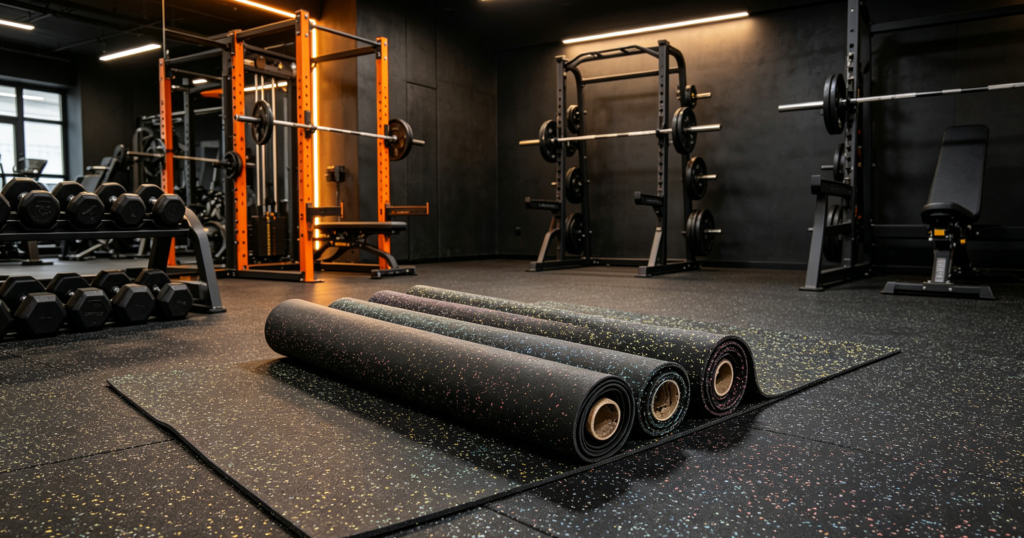
On the other hand, once a roll is in place, there are fewer joints between sections.
So the question isn’t simply which one is easier to install. It depends on the size of the project and the people handling the installation.
3. What Happens If Part of the Floor Gets Damaged?
This is something worth thinking about before making a purchase.
With tiles, a damaged section can usually be replaced without removing the surrounding pieces. This can be useful in busy training areas where certain spots receive more wear.
With rolls, replacement can be less straightforward because the material is installed in larger sections.
For this reason, tiles may appeal to facilities that want more flexibility for future maintenance.
4. Look at the Overall Cost
Price is naturally part of the decision, but the product price is only one part of the calculation.
You may also need to consider:
- Installation
- Shipping
- Cutting and fitting
- Material waste
- Maintenance
- Future replacement
For example, rolls may work well for a large, open space because there are fewer seams and less cutting. Tiles, meanwhile, can make more sense when the layout is divided into smaller areas.
It is worth looking at the total project cost, rather than comparing the price per square meter alone.
5. Which One Makes More Sense for Your Project?
There is no universal answer.
Tiles may be a better fit if you need:
- Flexible installation
- Easier local replacement
- Different layouts
- Flooring for smaller or separate training areas
Rolls may be a better fit if you need:
- Coverage across a large open space
- Fewer seams
- A more continuous floor surface
- Efficient installation over larger areas
Before making the final decision, consider how the space will be used today—and how it may be used a few years from now.
A flooring choice that works well for a small training studio may not be the best solution for a large commercial gym.
The Right Choice Depends on the Project
Rubber tiles and rolls both have their place in fitness and commercial environments.
Instead of asking which one is better, it may be more useful to ask:
Which one fits this particular space, installation method, and budget?
Once those factors are clear, the choice becomes much easier.
And if you’re purchasing for a larger project, it is always worth discussing the layout, installation requirements, and expected use with your flooring supplier before placing the order.