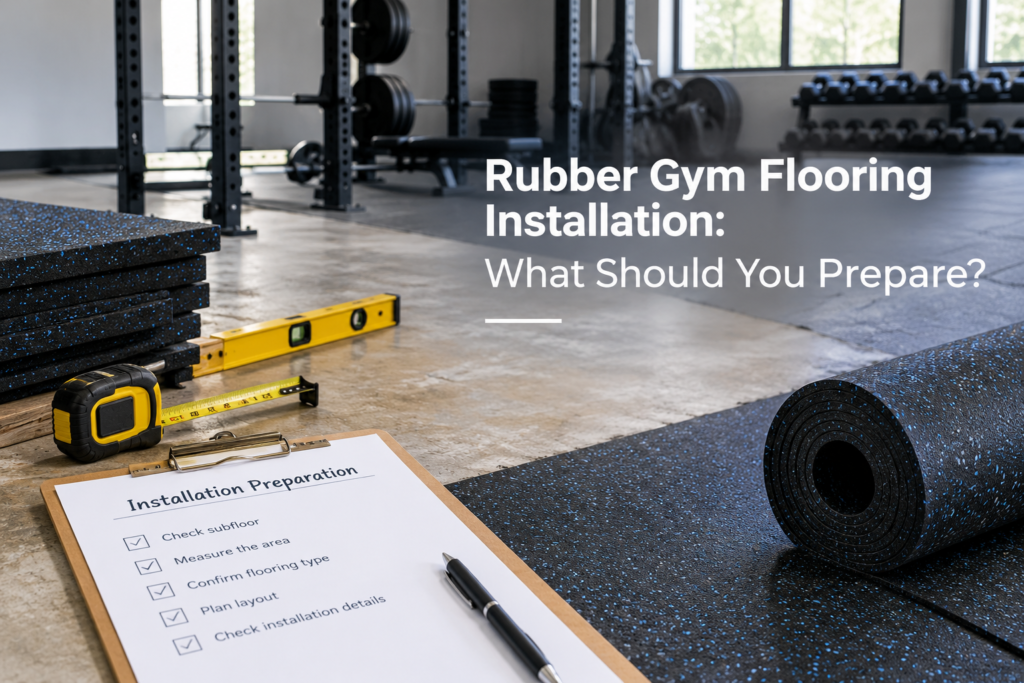
Buying rubber flooring is only one part of a gym flooring project. Before the rolls or tiles arrive, there are a few things worth checking first.
A little preparation can make installation much easier and help the finished floor look better.
1. Check the Existing Floor
Start with the floor underneath.
The subfloor should be clean, dry, reasonably flat, and structurally sound. Dust, oil, old adhesive, loose material, and other debris should be removed before installation.
If there are obvious cracks, uneven areas, or damaged sections, it is better to deal with them before the rubber flooring is installed. Small problems underneath can become much more noticeable after the new flooring is in place.
For a new concrete floor, make sure it has had enough time to cure and that moisture levels meet the flooring manufacturer’s requirements. Installing rubber flooring over a floor that is still too wet can cause problems with adhesives and the finished installation.
2. Measure the Area Again
You may have already measured the gym when asking for a quotation, but it is worth checking the measurements again before production or installation.
Measure the length and width of each area, and don’t forget columns, equipment rooms, doorways, or other spaces that may affect the layout.
For roll flooring, also think about the direction of the rolls and where the seams will be placed. For tiles, check how the tile layout will work around walls and corners.
A simple floor plan can save a lot of trouble later.
3. Think About How the Gym Will Be Used
Not every part of a gym needs exactly the same flooring.
A cardio area may have different requirements from a free-weight area. Areas where heavy weights are regularly dropped may need more protection than a normal training area.
This is why it is useful to tell your flooring supplier how the space will actually be used, rather than only asking for a certain thickness.
The right flooring is not simply the thickest or most expensive option. It should match the equipment, training activities, traffic level, and installation conditions of the space.
4. Plan the Installation Before the Flooring Arrives
Before delivery, decide who will install the flooring and confirm the installation method.
Some rubber tiles can be installed as interlocking systems, while rubber rolls may require a more detailed installation process depending on the product and project.
For larger projects, it is also important to inspect the flooring before installation. Check the product type, quantity, color, and visible condition. Manufacturer installation guidance commonly recommends checking the material before it is permanently installed.
If something doesn’t look right, it is much easier to solve the problem before installation than after the flooring has already been cut and fixed in place.
5. Don’t Forget the Details
The main floor gets most of the attention, but small details matter too.
Think about:
- Door openings
- Wall edges
- Floor transitions
- Expansion or movement joints
- Equipment placement
- Areas with heavy weight dropping
Expansion joints, in particular, should not simply be covered without considering how the flooring system is designed to handle movement.
A good installation is not just about putting rubber on the floor. It is about making sure the floor, flooring material, installation method, and gym layout work together.
A Few Minutes of Planning Can Save a Lot of Work
Rubber gym flooring is made for demanding environments, but even a durable floor needs a good foundation.
Before placing an order, make sure you know what area you are covering, how the gym will be used, what condition the existing floor is in, and how the flooring will be installed.
If you are still unsure about the right thickness, format, or quantity, it is better to discuss the project with your flooring supplier before ordering.
The more information you provide at the beginning, the easier it is to choose a flooring solution that works in the real gym—not just on paper.