Rubber flooring works well in both home and commercial fitness spaces, but the requirements are not always the same.
A home workout area may only be used by one or two people, while a commercial facility can see hundreds of users throughout the day. The right choice depends largely on how the space will be used.
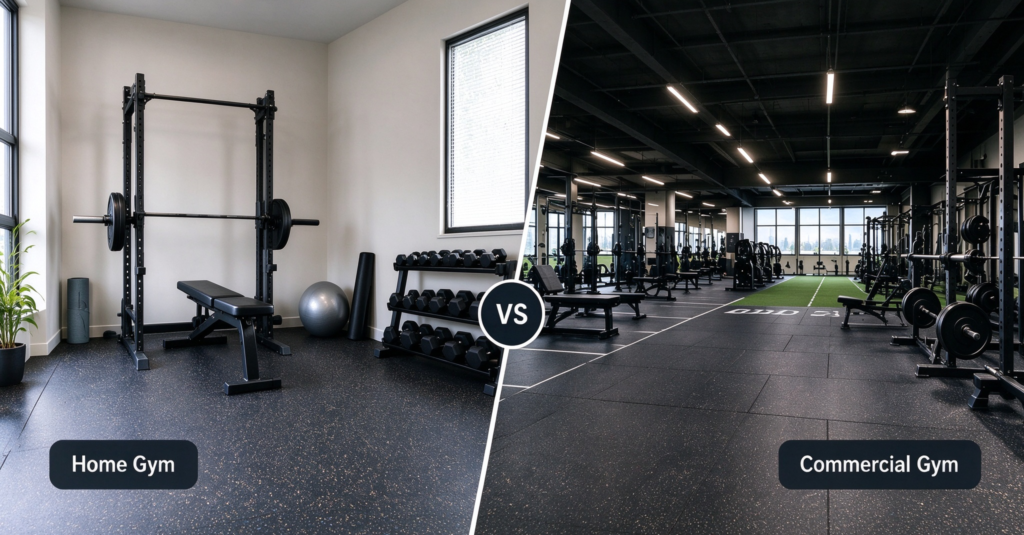
1. Consider Daily Use
The level of traffic is one of the biggest differences.
A home gym may only see a few hours of use each week. In a commercial facility, the surface can be under constant foot traffic and equipment movement.
For a private space, basic durability and easy maintenance may be enough.
For a busy fitness center, wear resistance and long-term performance become more important.
2. Look at the Equipment
The equipment in the space should also influence your decision.
A home setup might include a treadmill, exercise bike, bench, and a few free weights.
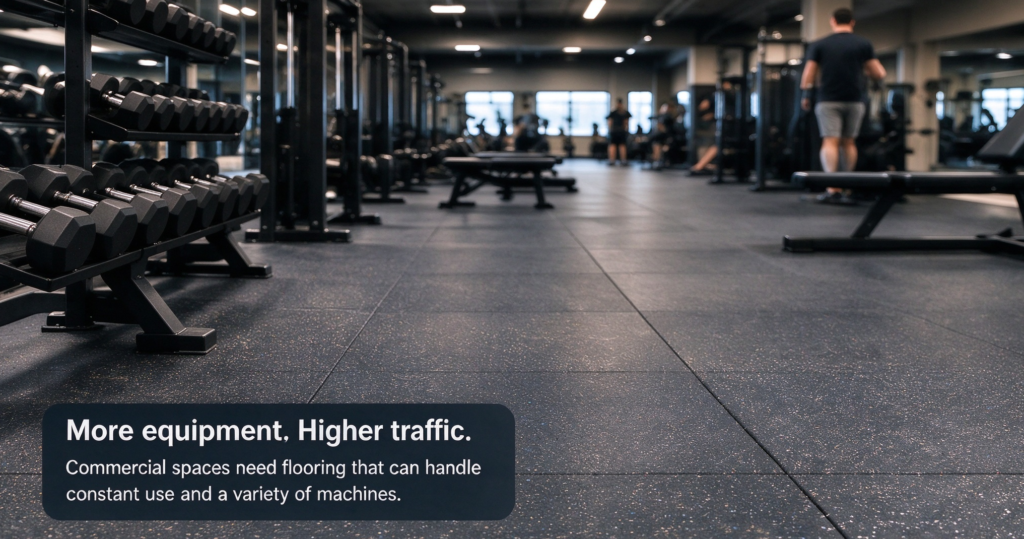
A commercial facility usually has a wider range of machines, free weights, and functional training equipment. Different areas may therefore place different demands on the surface.
For larger projects, using the same flooring throughout the entire facility may not always be necessary. Different training zones can sometimes benefit from different solutions.
3. Think About Installation
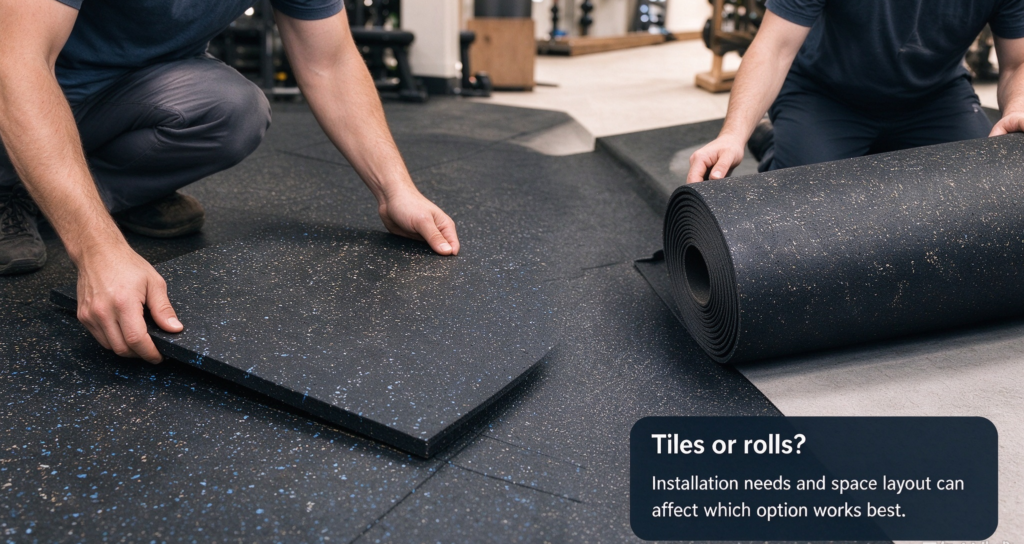
For a home project, installation is often relatively simple. Tiles can be practical when the area is small or when individual sections may need to be replaced later.
Large facilities require more planning.
For open areas, rolls can provide wider coverage with fewer seams and may help make installation more efficient.
The choice can depend on the room layout, access to the site, installation time, and future maintenance.
4. Don’t Overlook Maintenance
A private workout space is generally easier to maintain because it has fewer users and less daily traffic.
Commercial facilities are different. The surface may need to be cleaned frequently and deal with sweat, dirt, equipment movement, and heavy foot traffic.
For this reason, gym owners should think beyond how the material looks when it is new. Ease of cleaning and long-term appearance can also affect the overall value.
5. Look at the Long-Term Cost
For a home gym, the total area is usually smaller, so the initial investment may be easier to manage.
Commercial projects involve much larger quantities, which makes the overall cost more significant. But the lowest price is not always the most economical option.
Consider the complete picture:
- Initial cost
- Installation
- Transportation
- Maintenance
- Replacement
A material that performs consistently over time may offer better value than a cheaper option that needs attention or replacement sooner.
Which One Is Right for You?
There is no single solution for every fitness space.
For a home setup, ease of installation, appearance, comfort, and simple maintenance may be the main priorities.
For a commercial facility, durability, cleaning, installation efficiency, and long-term performance are likely to carry more weight.
The best choice comes down to the space, the equipment, and the amount of use it will receive.
Instead of choosing based only on where the flooring will be installed, consider how it will be used every day.