The rubber flooring manufacturing process involves several stages, from preparing raw materials to forming, finishing, and inspecting the final product. For this reason, distributors, wholesalers, and commercial project buyers, understanding these steps offers a clearer picture of how rubber flooring is produced and how manufacturers maintain consistent product quality.
In addition, distributors, wholesalers, and commercial project buyers, understanding this process can provide a clearer picture of how flooring is made and what to look for when working with a manufacturer.
1. Preparing Materials for Rubber Flooring Production
Production starts with selecting and preparing the materials required for a particular product.
Depending on your flooring type, the formulation may include rubber granules, binders, and colored EPDM granules. The proportions and material characteristics influence the product’s appearance and physical properties.
Therefore, Careful material preparation helps establish a consistent starting point for the next stages.
2. Mixing and Forming Rubber Flooring Materials
Workers mix the prepared materials to spread all components evenly.
Next, operators shape the mixture into the required form. When making rubber tiles and mats, workers pour material into molds. For other products like rubber rolls, teams use equipment built for continuous, large-format production.
In short, the exact forming method depends on the product structure and the manufacturer’s production setup.
3. Pressing and Curing in Rubber Flooring Production
For most molded rubber flooring products, manufacturers apply heat and pressure so the material sets and builds its target structure. Note that curing conditions change based on the material formulation and manufacturing method.
This means teams must control this production stage carefully. Any process variation can damage the finished product. As a result, manufacturers must follow tailored production procedures for every product type.
4. Finishing and Quality Checks
After forming and curing, the flooring may need cooling, trimming, cutting, or other finishing work before it is ready for inspection.
Quality checks can include:
- Dimensions: Confirming that size and thickness meet the agreed specifications.
- Appearance: Looking for visible defects and uneven surfaces.
- Consistency: Checking whether the finished products match the approved sample and order requirements.
specifically , inspection standards must align with product specs and end-use applications. Especially for bulk orders, ongoing quality checks during production deliver extra value.
If you’re looking for a manufacturing partner, learn more about Stardway Sports as a rubber flooring manufacturer.
Before placing a large order, buyers can also review what makes rubber gym flooring last longer to better understand the factors that affect long-term performance.
5. Packaging and Shipping Finished Rubber Flooring
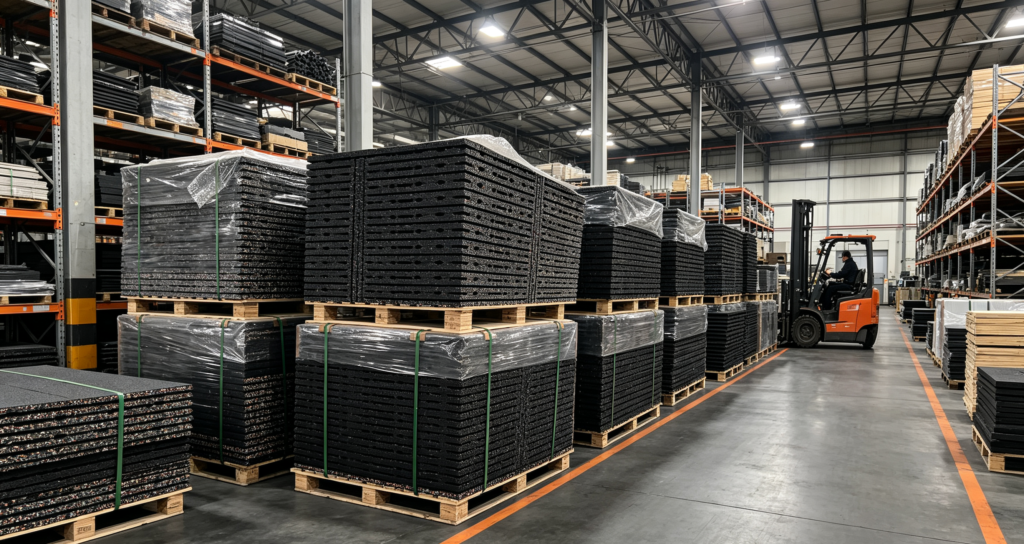
Once the products have passed the required checks, they are prepared for delivery.
Packaging should suit the product format and shipping arrangements. Clear product labels and accurate quantity records also help buyers manage incoming stock and organize distribution.
For international orders, it’s worth confirming packaging requirements, labeling details, and shipment arrangements before production is completed.
Final Thoughts
Rubber flooring manufacturing involves more than shaping rubber into tiles or rolls. Material preparation, forming, finishing, and inspection all contribute to the final product.
For buyers, the key question is not just how manufacturers make flooring. Instead, you need to confirm whether your supplier can hit agreed specifications across your full order.
When you understand the rubber flooring manufacturing process ,you can ask more targeted questions about production methods, inspection routines, and order consistency.
Ultimately, the goal is to work with a manufacturer that can meet the agreed specifications throughout the order, not just produce a sample that looks right.