Choosing suitable rubber gym surfacing is key to building a safe, durable, and comfortable fitness environment. Gym zones have unique surface requirements, so your best option hinges on how each space will be used
Whether you are building a commercial fitness center , weight room, or functional training area, here are the key factors to consider
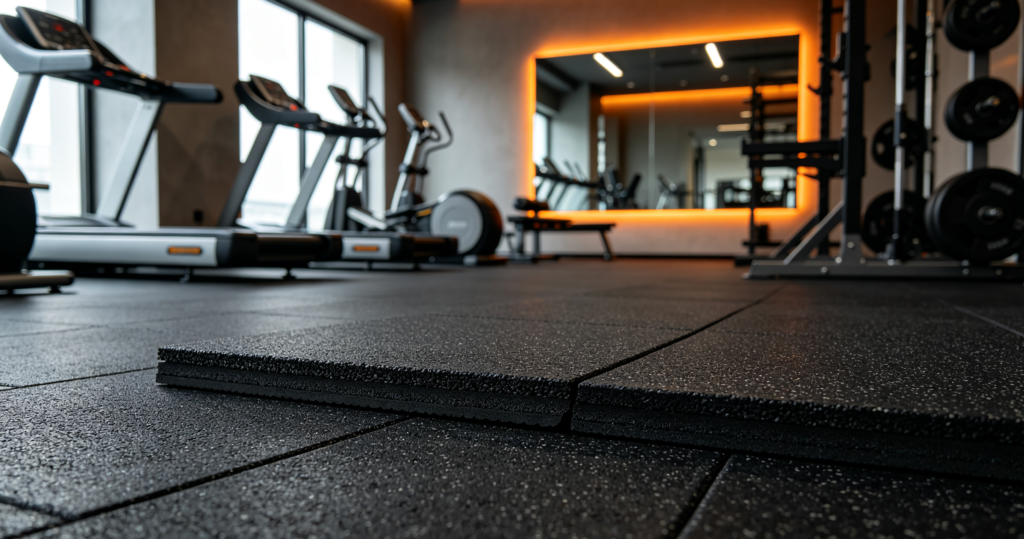
CHOOSE SURFACES FOR DIFFERENT GYM ZONES
Start by identifying what activities will take place in each area.
- Weightlifting Areas
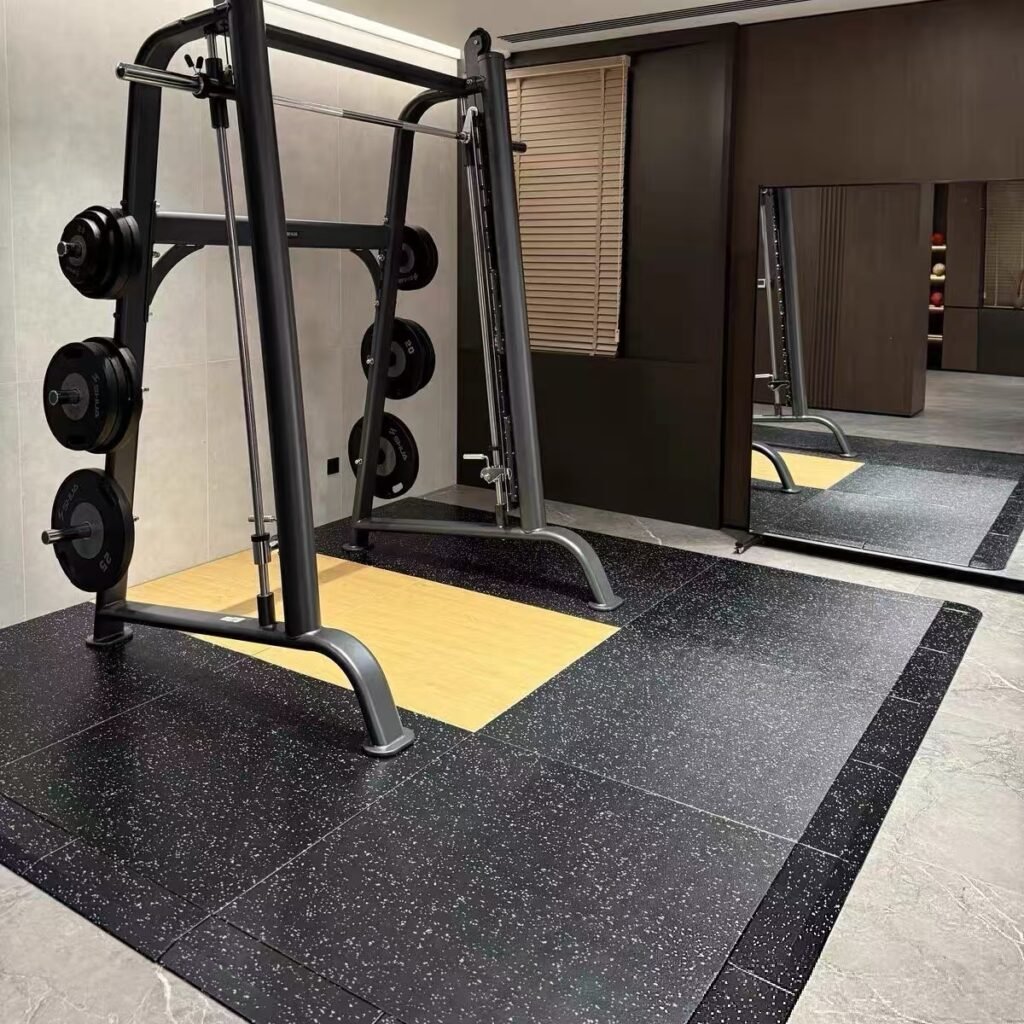
Weight rooms are exposed to heavy equipment and high-impact activities. Dropped dumbbells, kettlebells, and barbells can damage both the floor and equipment.
For these areas, choose heavy-duty rubber surfacing with good impact resistance, durability, and traction. Thicker rubber flooring is generally recommended for areas where heavy weights are frequently used. Even with premium heavy-duty rubber, pairing it with bumper plates (instead of bare metal weights) will extend the flooring’s lifespan and reduce indentations.
- Cardio Areas
Treadmills, bikes, and ellipticals create continuous foot traffic and vibration rather than extreme impact.
For cardio areas, look for rubber flooring that offers good durability, stability, comfort, and easy maintenance.
Functional Training Areas
Functional training may include jumping, kettlebell exercises, sled work, and agility training.
These areas need a good balance of traction, shock absorption, durability, and comfort.
CHOOSE THE RIGHT FLOORING THICKNESS
Rubber flooring thickness should match the level of impact and the type of equipment used.
As a general guide:
Light-duty flooring: Suitable for light-use and general fitness areas.
Medium-duty flooring: A good choice for cardio and functional training.
Heavy-duty flooring: Recommended for weight rooms and high-impact areas.
Remember, thicker does not always mean better. Consider the equipment, traffic, impact level, and subfloor before choosing the thickness.
CHECK DURABILITY AND IMPACT RESISTANCE
A commercial gym floor may experience heavy traffic every day. The flooring should be able to withstand repeated use without excessive wear.
When comparing commercial gym flooring , consider:
Rubber material and density
Wear resistance
Impact resistance
Surface durability
Expected service life
For weightlifting areas, impact resistance is especially important because rubber flooring can help protect the underlying concrete or subfloor from dropped weights.
Final Thoughts
Choosing the right rubber gym flooring starts with understanding how your gym will be used. Consider the activities, flooring thickness, durability, and impact resistance to find the right solution for each training area.
The right flooring can help protect your subfloor, improve safety, and provide long-lasting performance in a busy gym environment.
Looking for durable commercial gym flooring for your fitness facility?Rubber Gym Flooring Products Explore our rubber flooring solutions or Contact Us contact us to find the right option for your project.
FAQ
The right thickness depends on the workout area, equipment, and impact level. Heavy-duty, thicker rubber flooring is typically a better choice for weight rooms and areas where weights may be dropped.
Both can be effective. Rubber rolls are often suitable for large open spaces, while tiles offer easier replacement.
Yes. Rubber flooring is a practical choice for weightlifting areas because it offers durability, traction, and protection against repeated impact from weights and equipment.